AI is on everyone’s mind. Every Shopify Merchant wants to know, “How can I grow my Shopify store with AI?” People are starting to take advantage. People are selling solutions to “grow your business with AI.” Most of the solutions are slop. AI is a tool to grow a business. It does not by itself grow a business. If someone wants to use AI to grow their Shopify store, they’re asking the wrong question. The question they should ask is, “Does AI know my Shopify store exists?”
Does AI Know my Shopify Store Exists?
AI is on everyone’s mind. Every Shopify Merchant wants to know, “How can I grow my Shopify store with AI?” People are starting to take advantage. People are selling solutions to “grow your business with AI.” Most of the solutions are slop. AI is a tool to grow a business. It does not by itself grow a business. If someone wants to use AI to grow their Shopify store, they’re asking the wrong question. The question they should ask is, “Does AI know my Shopify store exists?”
AI’s Job
An LLM’s job is to give the user the best option. An LLM will not recommend a Shopify store just because it crawled it. Crawling a store does not make it the best option. If an LLM does not understand why a Shopify store has better products, it will never recommend it.
A Shopify Merchant can ask an LLM directly, “I own a Shopify store that sells Product D. When I asked for recommendations for products in my industry, you recommended Product A, Product B, and Product C. What content or information can I add to my Shopify store to be recommended over those other products?”
The LLM will mention writing articles comparing Product D to each product. Or tutorials about using Product D and its benefits. The articles will give the LLM more data to consider for recommendations.
AI Data
After a few months of writing content, LLMs might start to recommend a Shopify store’s products. In data, it will show up as “Perplexity” or “Gemini.” The data is too vague to optimize.
In Google Search Console, a Merchant can see the prompts used to find their store.
Google Search Console

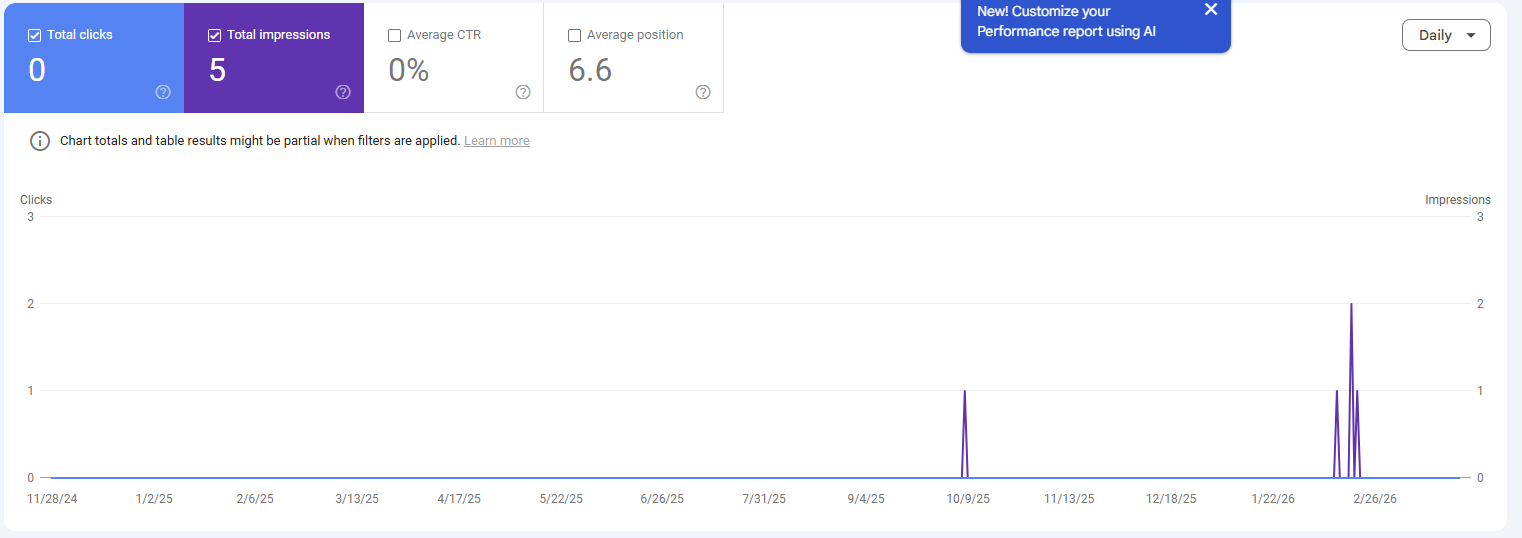
In the performance tab of Google Search Console, click “Add Filter.” Next, select “Query.” In the query dropdown, select “Custom (regex).” Then, input, “([^” “]*\s){25,}?” The string filters out any keyword shorter than 25 characters. These keywords don’t show up in standard performance data.
Once the custom regex gets applied, in the Queries data below, a Shopify Merchant will be able to see queries like, “What are the specific technical schemas I need to add to my Shopify site to improve my visibility in AI-generated shopping recommendations? (I’m located in the United States).” This is a prompt from an LLM who shares data with Google. My website has shown up in this prompt 4 times. Or at least, prompts with similar keywords.
What to do with the Data

It’s not only about having the data, but it’s about using it properly. How should the data get used? There are two options for the data, either rewrite the content the LLM recommends. Or write a more detailed article which fits the query better.
For example, the query in my data points to an article I wrote about product schema for a Shopify store. In my article, I only discuss using AI to make 1 type of schema. But there are several schemas a Shopify store can use. I can edit my article and add paragraphs about the other schemas. Or I can write a new article about schemas, including a paragraph about my previous article.
Which option is better? I’m going to answer this question as anyone in marketing would. It depends
Conclusion
AI and the tools around AI change every day. Platforms will continue to integrate AI into their products. Use this method to help ride the AI wave as long as it’s around.